Digital Experience Monitoring

Digital Experience Monitoring (DEM) to improve End-User Productivity

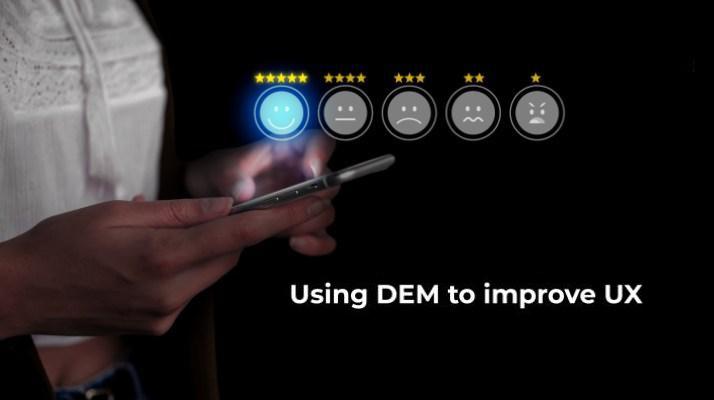
Digital Experience Monitoring (DEM) is a method that enables businesses to track and evaluate end-user experiences in real time. It gives IT teams the ability to find and fix problems end users could have with their digital experiences. This boosts workplace productivity.

We can utilize DEM to increase end-user productivity and below are a few use cases.

  1. Detect issues in real-time and troubleshoot them proactively before end users are impacted. DEM enables you to do both things. By doing this, you may avoid any potential downtime or productivity loss brought on by problems with the digital experience.
  2. Examine usage and performance patterns: DEM offers information on how end users are using digital resources, such as apps, networks, and devices. You can find any bottlenecks or inefficiencies that might be affecting production by analysing these trends.
  3. Compare performance to industry standards: DEM enables you to compare the digital user experience of your company to industry standards. By doing this, you may spot potential areas of weakness and make the required improvements to increase production. Monitor third-party applications and services: Many organizations rely on third-party applications and services to operate. DEM can monitor the performance of these applications and services and identify any issues that may be impacting end-user productivity.
  4. Improve the end-user experience: You can improve the end-user experience by using DEM. Because of this, customer happiness may rise, which in turn may raise productivity. You may build a setting that promotes productivity and efficiency by anticipating any problems and offering a seamless digital experience.

DEM is an effective technique for raising end-user productivity at work. Organizations can foster a productive and efficient work environment by proactively identifying and addressing digital experience issues, analysing performance and usage patterns, benchmarking against industry standards, monitoring third-party applications and services, and improving the end-user experience.

This article is a part of our 𝘿𝙞𝙜𝙞𝙩𝙖𝙡 𝙀𝙭𝙥𝙚𝙧𝙞𝙚𝙣𝙘𝙚 series. More to follow.

If you have queries related to 𝘿𝙞𝙜𝙞𝙩𝙖𝙡 𝙀𝙭𝙥𝙚𝙧𝙞𝙚𝙣𝙘𝙚 𝙈𝙤𝙣𝙞𝙩𝙤𝙧𝙞𝙣𝙜, reach out to our in-house DEM experts. They are happy to hear from you info@cmsitservices.com.

How Information Security & Cyber Security are cousins

“A ship is safe in harbor, but that’s not what ships are built for.”

—John A. Shedd

Cyber refers to the digital world and all things related to technology and the internet. This includes online communication, computers, networks, and the security of these systems from unauthorized access and harm. In short, cyber refers to the virtual world and ensuring its safety.

So, cybersecurity is the practice of protecting computer systems, networks, and internet-connected devices from digital attacks, theft, and damage. This involves implementing various technologies, processes, and practices to secure sensitive information and prevent unauthorized access, hacking, and other cyber threats. The goal of cybersecurity is to keep the internet and connected devices safe and secure for individuals, businesses, and governments.

Information security and cybersecurity are closely related but slightly different concepts. Information security refers to the protection of information and data from unauthorized access, use, disclosure, disruption, modification, or destruction. This encompasses a wide range of practices and technologies, including access control, encryption, firewalls, and backup and recovery systems.

Information Security = Cyber + Physical

In short, information security is a broad term that encompasses all aspects of protecting information, while cybersecurity specifically focuses on the protection of digital systems and networks.

To make information security solutions precisely effective, clients focus on use cases. In the context of cybersecurity, a use case is a specific scenario or situation that describes how a security event or incident should be detected, investigated, and/or responded to by an organization’s security operations team. A use case typically includes a set of rules, criteria, or thresholds that define what constitutes an abnormal or suspicious activity that requires further investigation or response.

Purple is commonly used in information security- purple from mixing red for offense and blue for defense. Purple Teaming is a collaborative process that combines the expertise and knowledge of both the “blue team” (defenders) and the “red team” (attackers) to improve an organization’s cybersecurity defenses. The objective of Purple Teaming is to identify and close gaps in an organization’s security posture, as well as to improve the effectiveness and efficiency of the overall security strategy. In a Purple Team engagement, the blue team provides the red team with access to its systems, tools, and processes, and then actively works with them to identify vulnerabilities, test defenses, and develop mitigation strategies. Through this collaboration, the blue team gains a better understanding of the organization’s vulnerabilities, and the red team learns how to improve its attack methodologies. The Purple Teaming approach helps organizations to prepare better for real-world attacks and to improve their security posture over time continuously.

If you have any thoughts or questions about your organisation’s security postures or initiatives, feel free to write to info@cmsitservices.com.

AIOps simplifies complex IT Environments

Complex IT Environments made easy with AIOps

Artificial Intelligence assisted IT Operations (or AIOps) is now the most pivotal technology intervention that is helping IT Services team to evaluate and identify the actual challenge in the IT estate that comprises of complex infrastructure and applications. The estate shares a volume of data that speaks a lot about the way the estate is behaving and how operations team can respond. The challenge is how to churn and analyse the data to enable the operations team.

With AIOps operations team can quickly identify the areas of concern and with faster turnaround can improve infrastructure response. AIOps helps monitoring and alerting the team for issues occurred, potential issues that may occur and by automating response to the issues. AIOps helps reduce the workload of monitoring team and allows them to focus on other critical tasks.

AIOps and Monitoring

When the IT estate is complex AIOps becomes crucial for monitoring the IT estates, as it is spread across multiple locations including cloud. The monitoring team needs to track logs, traces, and events.  The monitoring team must collect data and analyse data, to derive certain actionable. The AIOps platform does all the data collection, co-relation, analysis and combines related issues to trace the root cause and enables faster resolution. The key function of AIOps is to precisely identify problems before they occur and reduce the possibility of outage.

Areas that AIOps can deliver better success are

  1. 1. Data and its consistency: Systems generate volumes of data for monitoring and the data keeps increasing with time and addition of systems. The data need to be available for processing regularly and in a specific format for the AIOps platform to respond faster.
  2. 2. Design simplicity in complexity: The interconnections of the systems need to be designed in the simplest possible way. This helps alerts from varied systems, Applications, workloads, and other deployments to come in a proper way. The AIOps can respond better and faster to such well-designed environment.
  3. 3. Adoption to change: the adoption to changes that are due to governing policies, change in technology, migration to new systems (application and infrastructure) occur faster than ever before. The AIOps helps IT Operations team to adopt to the new platforms faster.
  4. 4. Cloud readiness: with the shift of investment to “As-a-Service” scenario, the cost optimization pushes the adoption of auto-scaling, in flight tuning, and can address higher volume of data.

With the overall complexity building up that increases the dependency on skills and systems, automation and AIOps plays a key role in helping overcome these challenges.

CMS IT Services enables deliver services with help of AIOps that enables customer derive benefits

Contactless Transactions: Digitally Transform your User Experience

As businesses are starting to reopen there have been some very important insights that have transformed a lot of things that we have thus far taken for granted. Speaking to our customers, partners and professional collaborators has given me some very crucial insights that are important for businesses to survive and thrive. I feel that technology can play a major role in putting those learnings and insights to work. It is a significant responsibility as much as it is an opportunity.  I’d like to reflect on one of the technological touch points that have the potential to transform businesses- Contactless Transactions.

Technology plays a very vital role in enabling businesses to perform and scale contactless transactions. This is an opportunity for us to evolve and scale rapidly.

Digital Transformation is pivotal to this evolution and thankfully there are mature products and robust technology platforms that help us achieve this. With CMS IT’s experience of driving Digital Transformation programs across industries we think three key factors are critically important in evaluating your digital technology partner/solution.

  • Modularity: Modularity is a very critical factor in building a digital transformation. Modularity enables you to shorten your go-live time as well as your efforts in building applications. The Industrial Revolution, if not anything has taught us the true importance of modularity.

In the auto industry, almost all the manufacturers make different parts at different places and then assemble them all. The delays in individual parts do not hamper or affect each other and supports innovative design. Programmers have been using modular design for a long time. The technology you choose should be completely modular to help you get the best out of your Digital Transformation quickly and efficiently.

Treating each block on its merits will always be easier than revamping the whole architecture. Intelligent Automation and Data Science/AI/ML can be applied across the application universe to improve usability, efficiency, and several other insights. Analytical insights can be utilized to identify the specific event’s impact on operations, products, and supply chains. Automation can be deployed across processes to define alternative pathways for people, goods, and services. The monolith approach to enterprise is quite old and a risky affair today. A modular approach allows you to be agile, scalable, easily adaptable, and upstream/downstream-compatible in terms of technology. As and when individual applications change bots can be reconfigured to work with the new ones. Data sets can be modified to cater to newer applications in the modular framework.

  • Equilibrium: After having taken a modular approach, this is the second most important factor to truly drive business for your organization leveraging technology. I would not open my laptop at home for most of the things that I used to open it for a few years ago. I can do everything using my mobile. Well, you might be thinking that we already have mobile apps developed. But the question here is, why do you want to maintain two different silos of production. One for desktop and another for mobile. Why not embrace a solution which enables you to develop at once and it takes care of the rest? This is truly important because a lot of common folks like me prefer transacting on the mobile on the go and this would be a very crucial factor in growing business digitally. Equilibrium is the essence of the world we live in. Not just the consumer-facing applications – a lot of your key work transactions can be enabled to work across channels. The challenges of enabling omni channel have been overcome by technology- however, the design of solutions for omni channel is a huge opportunity. A well designed omni channel solution with the support of optimum automation can be transformational.

  • Experience: Customer experience is more important than ever. Bad experiences result in unhappy customers who may look for other options. Experience, as they say, is king and therefore is to my mind the single most important factor in a digital transformation journey. When I say customers, I do so broadly. Your internal customers are included, and, in a sense, your suppliers are your customers too.

Take for instance, the insurance industry that has a lot of regulatory procedures that are a load on the customer. If the company has gone digital and the customer goes to your website and you have lengthy forms online that she/he needs to fill to get a policy. It would be better if there are options that make similar transactions minimal- this could be an example of experience as a differentiator. I remember the experience tilting my buy decision in insurance, groceries, and in endless other transactions.

A fabulous customer experience truly has the power to influence consumer minds and several organizations have done it already. A technology enabler that easily empowers you to give your customers an incredible experience is key!!

A robust digital platform can provide the data required for analytical insights into optimizing the efficiency of supply chains, identifying automation touch points, and minimizing physical contact touch points in the business. The experience layer is combined with the contextual data that is progressively improving the ability for us to respond to the user priorities. The final win for digital experience and indeed for automation and data science is the success of the transaction. More importantly, the resultant customer experience is a function of the transaction success and transaction experience. With a combination of intelligent automation, data science, and digital experience we have the tools to move the needle with internal and external stakeholders.

Practice Manager - Digital Services

How do you calculate Cloud ROI?

In general, there is always confusion between TCO and ROI. TCO is the Total Cost of Ownership and a component of ROI. TCO helps businesses focus on their core competencies and reduces the load on the IT department. When IT companies came out with the concept of managed services, they started looking at outsourcing their IT department’s functions to IT service providers. However, they retained minimal IT department resources and started reducing the Total cost of ownership. Cots products gave away inhouse resources of the IT department and further reduced the TCO. However, the real TCO reduction started when the cloud came into the picture. It totally reduced the capex cost and moved the infrastructure from the premises to a third-party premise. ROI on the other hand focuses not just on removing capex costs but also gives a return on investment for the customer. Let us look at the parameters that impact the ROI on the cloud.

1. Downtime: The single most important parameter that could possibly affect the return on investment is the downtime that happens across the IT systems. It affects customers, affects internal stakeholders and so on. Due to extensive experience, the public cloud service providers have drastically reduced the downtime due to Hardware Infrastructure. The second biggest reason for incidents is the application infrastructure. The cloud service providers not only abstracted out the hardware for the users but also abstracted the application infrastructure namely web servers, application servers, cache management, container management, application deployment and all these too. There were issues in deployment without a rollback plan. All the public cloud service providers apart from providing just hardware provided managed services for application infrastructure. Effectively downtime hours had been reduced by the cloud service providers both due to hardware as well as application infrastructure.

2. Agility: Agility is the ability to move quickly and easily. IT departments have been slow on deployments for the changes required by the business as the primary change is not only in the development code but the workflow that needs to change. The cloud service providers have got flexible workflows for deployment by bringing DevOps infrastructure into the cloud. The DevOps infrastructure of the cloud service provider provides Code Repository, Automatic Build, Automatic Deployment, and rollbacks followed by quick monitoring.

Autoscaling is an important parameter that is affecting agility. Quick provisioning of compute engines, creating security policies and attaching it to the compute engines, ability change at one place that gets reflected everywhere and so on. While Agility cannot be exactly defined in hours, the flow disruption occurs due to lack of agility.

3. Pay for what you use: In a traditional data centre model the resources are there even if you do not use it. A onetime irreversible budget was created. Irreversibility is the biggest issue in capex buying. There will be many idle resources and the capacity prediction has been a big problem. Cloud service providers solve all the problems of underutilized and over-provisioned resources. Hygiene issues can be automated. Resource usages are completely automated.

4. Technology deprecation: Every advancement in technology leads to cost reduction or capacity enhancement at a lower price. The cost of upgrading technology in a data centre environment is enormous. The process of doing POC, pilot and production is a long-driven process. However, public cloud service providers make it easy.

The final equation for ROI is always in terms of money. Converting the above tangible and intangible parameters into time lost or gained is important to calculate the return on investment. The ROI Equation will have an investment component. It has a traditional investment component as well. So, a simple way to calculate cloud ROI is as follows,

Note: The step no (c) is the most difficult parameter to arrive at to deliver ROI.