Employee Experience Trends in Human Capital Management

CHROs (Chief HR Officer) want to stay ahead in their game, adopting the latest trends in their efforts to nurture talent, retain employees and achieve enhanced employee development. The human capital management (HCM) field is evolving at a fast pace, laden with innovation, changes and wonderful ideas for team development.
As per noted experts from the field, here’s an extract of latest trends in HCM landscape:
Give a more human semblance to HR platform through technology
Jeanne Meister, workplace futurist, opines that technology should be the tool in augmenting the role of people than replacing them, bringing back the human factor to workplace. It might sound rather counter-intuitive, yet going by emerging trends, technology undoubtedly has entrenched in every aspect of enterprise workplace.
For instance, Artificial Intelligence (AI) which is the most discussed and touted advanced science has definitely changed the way we work. According to Meister, in order to change our viewpoint on AI, we should clearly profess the language shift for AI to IA, intelligent augmentation. In the latter the emphasis is rather on human approach than the hovering thought of machines replacing the humans at workplace. For a simple groundbreaking fact that it’s the humans who still partake in decision-making although technology has surely changed the way decision are taken and strategies are made and implemented.
As CHROs, the HR leaders, the task should be to measure how technology can bring back the quality in jobs and look for new skillsets and roles that are further created as a result of ever-changing technological implementation to enhance the resource quality and output.
Compassion as a key Leadership Quality
The word Compassion has been an oversell lately. As per a HR survey conducted by a consulting firm, from the analyzed responses of over 35,000 leaders, more than 90% of participants agreed that compassion is a key composite characteristic leadership attribute and 80% would want to enhance that but are unaware of the exact way of how to do it. This aspect being so significant is still ignored in most of the leadership training too.
Leading enterprises are making a conscious effort as a part of the HR strategy to highlight compassion as one of key skills in job descriptions too. HCM platform integrates disparate HR initiative and roles yet happiness is the key that holds contention for employees, clients and all the stakeholders. And there is no better way than compassion.
Personalization of Learning and Development
Training is no more confined to technical and soft skill requirements or team based. Employees expect to have a seamless interface at work too that reverberates their technology personalized experience in personal space. These expectations mirror in their learning and development (L&D) path too. Therefore, nominating to trainings by HR or reporting manager is no more the criteria.
The business workforce now has the option to drive their learning path through an access to learning and development channel. The path will further be a hybrid playlist curated by employees alongside the formal list of programs developed by the L&D unit. The approach can be a dynamic approach paving way to user-generated programs, developed by professional leaders who impart humanly compassion leveraging the technology.
However, the challenge for leaders is to sift through the gamut of learnings and choose the vendors who are the best fit for their rapidly evolving needs and capable of aligning that with the company’s existing LMS systems.
Harness Design Thinking in HCM development
Design thinking is the latest methodology embraced by CHROs globally in problem solving that focuses on creating solutions through a user centric approach. It has achieved a great breakthrough in HR and L&D landscape. The concept of design thinking operates beyond the thought process of what employees want, shifting to the latest technology driven approach of how to design an overall experience that aligns the employees’ and business needs.
Right from the 1st step of recruitment to last of exit interviews, every facet of employee life cycle is customized and exposed to design tweaking that helps reboot business performance management process. Leading enterprises have made an earnest effort of embracing the design thinking as one of core business offerings as a multi-step methodology for better employee management and resource enhancement.
The key element is the second step wherein ideas are sketched in before the final decision-making process. This step is critical since it clearly defines the company’s design principles for making the most appropriate decision focusing on the overall design thinking methodology of HR framework.
DIY Team Creation
As per research, 70% of employees want to be the part of decision-making process while forming their own work teams. Trust among colleagues is the most important factor that helps cement the team work and keeps them intact while working together. In that case it’s a no brainer to fragment a well-formed team.
Lot of firms are embracing this approach, keeping a strong DIY team intact and moving them around in the organization without breaking them. Many enterprises are embracing the evolving trend and working towards providing a platform for leaders initiating to empower employees to assemble their ‘dream team’.
Conclusion
These five trends are a downstream of HCM platform leveraging technology to reinstate the human factor in the business. The trends illustrate that new models are emerging while enhancing the employee engagement and talent management, departing from the traditional form of fragmented HR platforms, thereby also developing new models and frontiers in employee growth and people development, and encouraging CHRO to exercise creativity and personal discretion of compassion.
Please post your thoughts in the comments section.
References
https://inpowercoaching.com/5-employee-development-trends-human-capital-management/
https://www.managementstudyguide.com/human-capital-management-benefits.htm

Cloud Based Mobility IT Solutions: Benefits

The term “mobility cloud computing” is used for the entire gamut of storage and processing of data remotely from a device, while the user can access their data uninterrupted and process it seamlessly through any given device, securely.
As in case of mobile device and application landscape, the mobile management ecosystem is constantly evolving. There are various components of mobility management, including mobile device management, mobile app management and mobile security.
Earlier, in our previous blog we discussed the issues related to cloud mobility implementation and management. Although the process of implementation needs extreme expertise and can be challenging, however Cloud based mobility management has its own benefits that cannot be ignored. Let’s briefly discuss some of the important ones.
Benefits of Cloud based Mobility Solutions
There are multiple vendors and numerous deployment mobility devices – including on-premise, full cloud and hybrid. The dynamics of the components included in any solutions differ from one vendor to another.
Rapid deployment:  It takes quite a long phase for a business to roll out Mobile Device Management (MDM) system. However, cloud-based solutions can be activated in a day which empowers an enterprise to rapidly deploy policies and control access with a mere click for configuration and provisioning.
Flexible expense management: In majority of cloud-based models the payment mode is predictable, and service based, and you scale at your pace aligning to business requirements. Whether the business requirement is for 500 or 1000 employees at any given time, it takes the same amount of IT resources and can be achieved in the same time frame.
Cost-effective for Businesses: Employees and users share application and resources without any huge investment on a software and hardware that enables enterprises to have least expenditure using cloud computing tools. The technical setup and operational resource allocation are minimal that results in optimum price structure, quick and simple.
Device diversity:  Today, businesses support RIM’s blackberry operating system and also have Apple’s iOS devices. In addition, there are Android and Windows based phones. A cloud-based management solution is a one-stop solution that supports all the operating systems.
One console for all: In extension to device diversity ecosystem, while you support multiple operating systems, you will have many consoles. You can get an integrated console view through an on-premise MDM solution but only when you roll out the solution. With cloud mobility management, you establish the capability to support iOS-based devices on one console and use that same console to support Android devices as well.
Almost Zero-day updates: Operating system landscape evolves rapidly. Each time there is a new version of operating system rolled out, you have the painstaking process of updating your mobility management solution. As a result, your IT team lags for weeks in supporting the newest releases of an OS. As opposed to the cloud-based providers who have the service updated almost instantly and the effort is minimal.
Conclusion
The cloud is constantly evolving and so has been the way mobile applications are developed and used within the companies. Though the marriage of mobility and the cloud is like a match made in heaven for disparate teams to collaborate and access business-critical applications unanimously and virtually from any corner of the globe 24/7. Still, IT leaders have the existing challenges to be allayed before they turn cloud and mobility into a “happening couple” to drive business innovation and growth.
CMS IT Services, with its wide expertise and experience brings together tailored and enterprise-based cloud mobility solutions that are robust, agile and completely meant for next generation employees to counter the cloud and mobility challenges and exploit the several benefits for a future ready business IT infrastructure.
Our endeavor is to present interesting articles for our readers every time they visit our blog. We would like to hear from you. Please post your thoughts in the comments section.
References
https://www.business.att.com/learn/operational-effectiveness/5-key-benefits-of-cloud-mobility.html
https://www.cio.com/article/2927846/mobile/cloud-and-mobility-key-issues-to-consider.html

Cloud Mobility: Key Issues

In the past few years, Telecom sector has been jubilant over the groundbreaking sales of smartphones and tablets. The digital space and internet world are brim, with numerous compelling devices being added every day and the number doesn’t seem to stop anytime soon. There is an exponential surge in consumerization of IT – Bring your own Device (BYOD) being the top in the list.
On one hand if there is a boom in smartphone and tablets market, on the other side companies grapple with the challenge of supporting and managing such a gamut of devices owned by businesses and employees.
The intersection of cloud and mobility has created trends of explosive growth, but they also come with key issues and IT pressure. Let’s discuss some of the impending grey areas.
Challenges of Cloud & Mobility
Data security & Network capabilities: Your IT environment needs to be robust enough and sufficiently developed to allow seamless transfer of applications to a hosted model or software-as-a-service (SaaS) solution where the application itself resides in the cloud. With growing budget of corporate software development for mobile apps, issues of scaling and management of growing demand also arise, especially with the routine increase in density of mobile users accessing cloud-based data and applications.
Data Security of Mobile devices: Although cloud platforms are secured with SSL and digital certificates yet data security for mobile devices remains to be looming – more importantly it stems from when people lose their devices which happens often. Similarly, managing the data integrity is a pressing issue when users sync their devices with the cloud. If one of your resource is updating a document and doesn’t sync the latest back to the cloud, other users will be stuck with the older version.
Multi-platform access: To provide multi-platform access to your users when operating within private cloud networks is a huge challenge since the private cloud architecture is very complex.
Updating Security policies: With evolving cloud ecosystem and mobile apps the security policies too need to be constantly updated which will be a proverbial task in progress. As per an IDC cloud survey of nearly 1700 technology decision makers, “Concerns about the security of various cloud computing solutions and the risk of unauthorized access as well as concerns over data integrity protection is ranked No. 1”.
Irrespective of the company policies people have the tendency of using their mobile devices both for official and personal purposes. One of the options for remote management of mobile devices is offering tools like encryption and passwords to create “enterprise sandboxes” that segregates the personal and corporate data conveniently.
BYOD prepared infrastructure: Another daunting problem that IT providers come across is the preparedness of their IT infrastructure for an enterprise BYOD policy to make it possible for data to be transmitted and accessed easily from a range of mobile devices with various operating systems.
Collaboration of access: Accessing the cloud via mobile devices can become a big problem for collaboration. Several mobile platforms are not supported by sophisticated document editing tools. In addition, there are a very few options for multi-party video conferencing while using document sharing option over the cloud.
Network Infrastructure: Network infrastructure need to be continuously upgraded, should be latest and strong to maintain consistence in connectivity, else the cloud app will be rendered completely inefficient and useless.
This problem can be handled by using the HTML5 that enables data caching that further empowers the mobile cloud application to function normally and continuously even during an outage.
Conclusion
Mobile Cloud Computing is a hybrid model that is a mix of Mobile devices accessing the services remotely available on the cloud. Many organizations are still in its initial stage of implementation and getting a grip of exploiting the benefits of it. In tow of these issues the benefits of cloud mobility can be impeded which needs to be addressed for optimized cloud-based mobility infrastructure.
We will discuss the benefits of cloud-based mobility solutions in our next blog.
Please post your thoughts in the comments section.
References
https://www.business.att.com/learn/operational-effectiveness/5-key-benefits-of-cloud-mobility.html
https://www.cio.com/article/2927846/mobile/cloud-and-mobility-key-issues-to-consider.html

Machine Learning – Evolution in making of Modern Enterprise

Those in analytics might have come across the term Machine Learning. It is often misused and glorified as a magnificent future for machines replacing humans.
Though there is some prejudice and a lot of grandiose built around ML, the fact is ML is the most powerful and advanced technology for a modern enterprise.
In a very crisp and layman language we can conclude, Machine learning can be used in automation of repetitive tasks that would otherwise need to be done manually, thereby enhance enterprise efficiency and execute repeatedly at scale.
What is Machine Learning (ML)?
ML is a specific field in computer science that emphasizes on machine programming to enhance self-performance through data and iteration.
The start point for conventional programmer and ML is almost similar – both intend to resolve problems and begin with developing familiarity with problem domain. However, the differentiation aspect is of execution. Programmers use their ingenuity to formulate a computer program to develop solution. On the other hand, data scientists who implement ML collect inputs and target values and feed the instructions to the computer to develop a program for a desired output.
Say for example, in streaming of videos, like Netflix – engineers must spend tedious hours to develop recommendation options for its users based on the history of choices or early inputs given. In certain cases, this works, the program helps pair user watched videos for recommendation based on factors such as genre. However, it is difficult for programmers to sort among a pile of thousands of titles and lakhs of subscribers with unique history of each.
While sifting through piles of data is a challenge, another problem that programmers come across is recommending videos that user might or might not like based on their watch and browse history. Chances are their interest might have changed which is quite impossible to predict.
When human intelligence fails to predict such patterns, ML pitches in. Algorithm based ML gathers data and learns from them for valid predictions rather than relying completely on human instructions. Further, ML keeps upgrading its data-based learning time to time as more and more information users provide through their browsing history.
AI v/s ML
The most common question people end-up asking is the difference or correlation between AI and ML. The answer is ML is a type of AI, a subset under the vast field of artificial intelligence. Further AI is a subset of computer science. To be precise ML entails deeper technical aspect, a specific methodology. Whereas AI is non-technical, an intelligent system that can mimic human behavior.
Supervised Learning v/s Unsupervised Learning 
Supervised learning is data mining of drawing inference from a function from labeled training data. Most of the practical machines use this format. In case of supervised learning you have input variable and an output variable, and an algorithm is used to map the function from input to output.
Subsequently, once the training process is standardized, Programmers test for program accuracy and make required amends, and repeat the entire process until they achieve full-proof accuracy in the overall process of supervised learning.
For example, Cortana and other AI enabled assistants used in your phone or other devices, is trained as an input of human voice and works as a result of this training.
In case of unsupervised learning the program is trained without the labeled and structured data. Alternatively, it means that the algorithms are trained to give results only through inputs without respective output unlike paired training in supervised learning. The algorithm learns to condition itself to process the structure of data to understand it and provide valid outputs.
Deep Learning
The way ML is a type of AI, deep learning is a subset of ML. Various streams of ML algorithms, deep learning being one of it, is related with neural network.
A neural network is based on the underlying principle of how human brain cells, the neurons, function. Its achieved by fine layers of composite units to understand and interpret correlation based on data. When the layers are deeper, hidden layers being more than one in the neural network, it’s called deep learning – it can be supervised or unsupervised, at times semi-supervised.
Engineers have already put deep learning to solve the most complicated tasks and crack the toughest ones, most critical being training self-driving cars and cancer diagnosis.
Why should enterprises explore ML?
The advancement in AI and further sophistication in ML has taken the business landscape by storm. For example, self-driven cars on the road and a weather forecasting computer program based on ML algorithms.
Machine learning as a service (MLaaS) is a set of services that provide ML tools as bundled cloud solution. MLaas is a cost-effective array that offers the enterprise advantages of ML, saving their time and exhaustive in-house establishment of ML team.
MLaaS also circumvents the infrastructure related challenges like data pre-processing, model training, model evaluation, and finally, predictions.
Some more examples include cyber security, process automation, data analysis in insurance and finance sector. It is quite possible that ML has already affected your business enterprise too in one way or the other.
The million-dollar question is how you train your teams to adapt to ML and use it successfully.
Conclusion
Automation starts with data – precisely the machine data that sits on a large assemblage of hardware, software and management tools that construct the present IT infrastructure and services. The daily addition of new devices and technology to the existing digital landscape has made the enterprise ecosystem complex. By automation of repetitive tasks and employing innovative ML, businesses can overcome the talent constraints and achieve almost zero error. In addition, automation helps gain new insights for better outcomes, drive efficiencies and improve the security features.
Machine learning will increasingly become priceless as the technology matures with time and many more businesses embrace algorithm-based learning for a smarter enterprise. The technology has already impacted most of the sectors such as car industry and insurance and finance sector which are large scale. However, there are lesser known innovations of ML too that are just about the corner, waiting to be discovered and embark on an exciting journey.
What are your thoughts on Machine Learning? We’d love to hear from you. Please post your comments.
References
http://www.ibmbigdatahub.com/blog/what-is-machine-learning
https://www.simplilearn.com/what-is-machine-learning-and-why-it-matters-article
https://blog.algorithmia.com/introduction-machine-learning-developers/


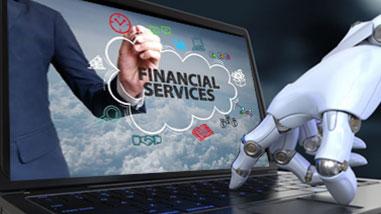
Artificial Intelligence Transforming Financial Services

The first incidence of a machine and human crossing paths was the epic win of Deep Blue, the supercomputer, over grandmaster Garry Kasparovin 1997 in an intense game of chess. The triumph certainly triggered a debatable topic and kickstarted the rise of the machines.
In 21st century, Artificial Intelligence (AI) has moved past the celluloid and realms of research, establishing its presence in the real world amid an unparalleled convergence.
AI has been pivotal in changing the face of the entire financial services, taken by storm. Almost every financial enterprise has embraced the technology for better time keeping, cost effectiveness and value-added services.
Use of AI in financial sector has been on a surge yet at an incremental scale. In India nearly 36% of Financial institutions have already invested in AI technology and 70% are reported to do so shortly.
Development in high-density parallel processing infrastructure and an extraordinary surge in the bulk and kind of data generated, powered the adoption of Machine Learning and many more cognitive technologies. Fueling this trend is the snowball effect of cloud computing and mobility as well as open sourcing of machine learning (ML) algorithm.
Business Imperative
Financial institutions have compelling reasons to implement AI. Falling interest rates continue to impact the bottom line, banks are left with minimal options than to boost operational efficiency by minimizing the unscheduled downtime of systems and reducing the resources to meet the evolving demand.
Building on the top line through enhanced and tailored targeting of offers and optimization of sales strategy is the key focus area now. Another major driver to leverage AI is the compelling need to comply to the stringent regulations across different areas where the banks operate.
Finally, financial institutions are realizing the substantialcapability of enhancing marketing effectiveness and customer service through automation.
Surge in Use Cases
Let’s discuss some of the emerging AI applications and machine learning that have gained prominence recently. While banks, asset managers, and insurers have employed various pilots across the front, middle, and back offices, here are some of the key initiatives:
Credit and Insurance Underwriting: The lending and insurance department has rolled out machine learning to process the lending and insurance applications swiftly without incurring extra cost nor compromising on the risk assessment standards. The core message is machine intelligence definitely excels in accuracy, scale and speed as compared to human intelligence while sorting and analysis of colossal bulks of consumer data.
For example, banking and insurance sector has already started using self-learning algorithms to pittons of consumer data sets factoring age, job, marital status, credit history, and similar gradients in order to flag the risky profiles of individual applicants based on the generated information.
Fraud Detection: Previously, teams of finance experts used to follow a standard conventional checklist of risk factors and some complicated set of guidelines to detect fraud. However, ML-driven fraud discovery system proactively picks the irregularities and flags it for the security people to immediately investigate the matter in depth. The potential of intelligent algorithms to proactively forest all the possible fraud amongst a pile of infinite data sets is quite helpful in reducing false positives, wherein an anomaly is flagged and found out to be a false alarm.
Work flow Automation: Bank managers and insurers have already employed natural language process (NLP) to seamlessly automate some of their processes to rationally cap their operational costs and also enhance the customer satisfaction. Chatbots replacing the humans on the customer service interface has gained quite some traction.
‘Yes Robot’ of Yes Bank is a Personal Banking Assistant that helps customer conveniently check balance, recent transactions, send and transfer money, recharge and pay the phone bills, check loan eligibility and many more services. It also helps locate nearest bank ATMs & branches. It can be accessed through the applications and interfaces such as the Facebook Messenger.
ICICI Bank’s ‘software robotics’ is a kind of software that automates, regulates  and performs tasks of high-density and volume that needs to be  carried out over multiple applications while also increasing productivity. It uses facial and voice recognition, NLP, Machine Learning and bots to automate more than 200 business processes. It uses algorithms to sort processes & connects internal applications to external ones such as Aadhar or PAN card verification for KYC compliance. A sequential decision-making method is then used to sort the processes.
Asset Management: Termed as “robo-advisors,” like the Betterment and Wealthfront, are globally providing algorithm-based, automated financial planning solutions to their clients, serving them in developing investment portfolios that are aligned to their individual goals and risk tolerance.
Back home, FundsIndia.com has a robo-advisory service and looking for partnerships with financial giants. 15% of the company’s overall portfolio comprises robo-advisory services. Similarly, 5nance has an agreement with HDFC Mutual Fund for its robo-advisor.
Algorithmic Trading: Hedge funds and many other trading platforms in finance marketing, use complex AI algorithms to transact millions in the stock market every day, day after day. These systems, that are derived from machine learning and deep learning, facilitate “high-frequency trading” (HFT) while scrutinizing vast volumes of market factors in real time.
Conclusion
AI has umpteen applications in the finance and insurance environment, positioned to give the entire industry huge facelift in years to come via detection and analysis of brand sentiment; providing investment insights; making banking more efficient and less risky, and identifying fraud proactively.
As the rise in technological innovation is breaking the glass ceiling, the finance and insurance sector imperative must be to prioritize their goals and establish long-term strategies. We have been witnessingclear indicators of confident maturity among CIOs as they weigh their investments.
Liked our blog, pleaseleave your comments. We value your thoughts to make this section more interesting.
References
Nagasundaram, M. (2018). Retrieved from www.hcltech.com: https://www.hcltech.com/blogs/rise-machines
PWC. (2018). Retrieved from www.pwc.com: https://www.pwc.com/us/en/industries/financial-services/research-institute/top-issues/artificial-intelligence.html
Sigmoidal. (2018). Retrieved from https://sigmoidal.io: https://sigmoidal.io/real-applications-of-ai-in-finance